There is no single formwork system that suits every job. The right choice depends on the type of structure, the number of reuses, the required finish, the project budget, and the programme. Here is an overview of the seven main formwork types used in Australian construction, from traditional timber through to high-rise tunnel systems.
Formwork can account for 35 to 60 percent of the total cost of a concrete structure. Choosing the right system for your project is one of the most consequential decisions a builder or project manager makes.
Timber formwork
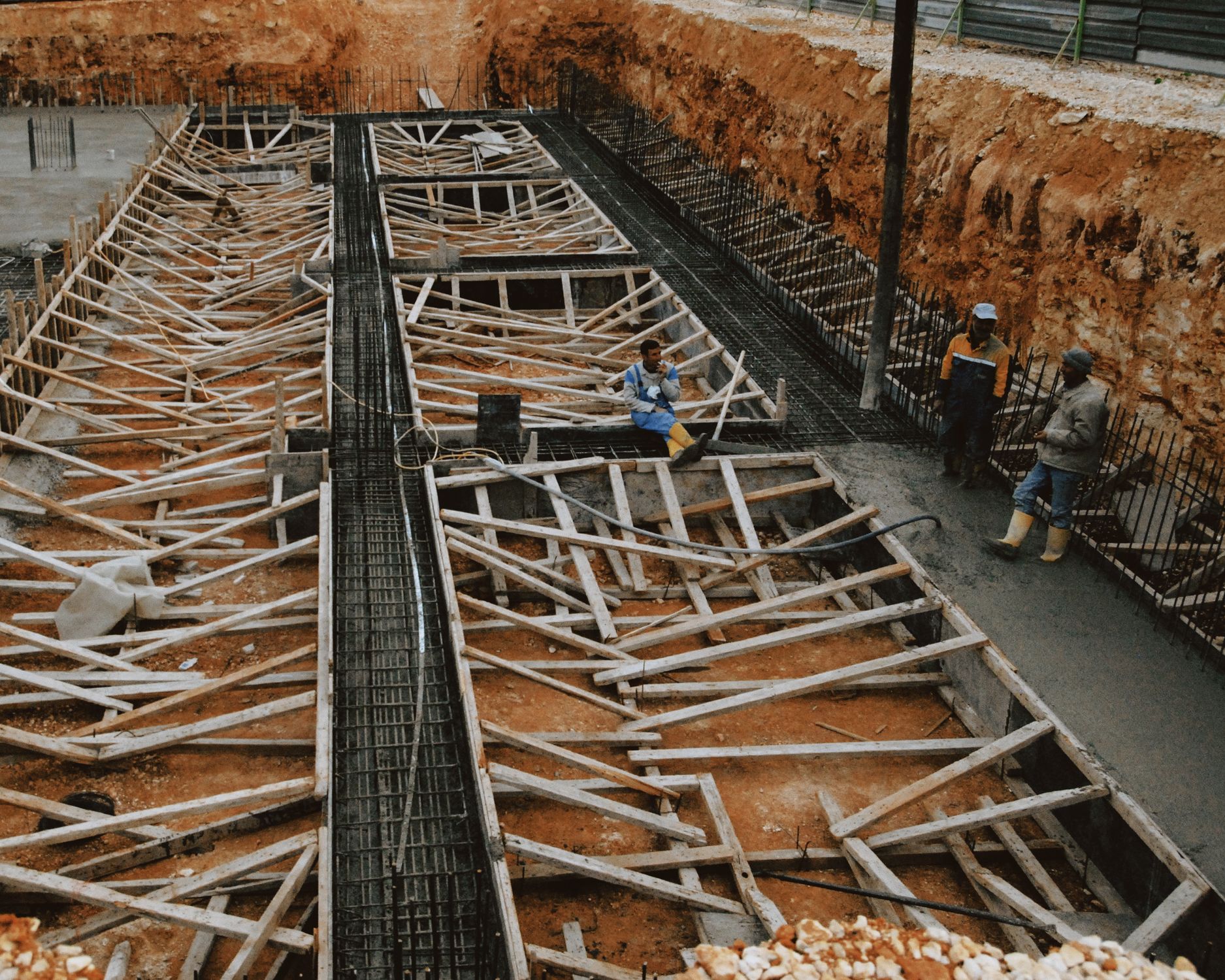
Timber is the oldest and most widely used formwork material, particularly on residential and small commercial projects. It is easy to source, simple to cut and assemble on site, and does not require specialist equipment to handle.
Timber formwork is fabricated by carpenters and formworkers directly on site, which makes it highly flexible. It can be shaped to almost any geometry, including curved elements, raked slabs, and one-off features. The trade-off is that timber has a limited number of reuses before it deteriorates, and fabrication is labour-intensive compared to modular systems.
Best suited for: residential slabs, footings, one-off shapes, small commercial projects, and any situation where flexibility matters more than cycle speed.
Plywood formwork
Plywood formwork uses resin-bonded sheets fixed to a timber or steel frame. The smooth face of the plywood produces a better concrete finish than raw timber, and the sheets can be reused across multiple pours if properly maintained.
Plywood panels are available in large sheet sizes, which means fewer joints and a cleaner finished surface. They are light enough to handle manually and can be cut on site to accommodate non-standard dimensions. Plywood is a step up from raw timber in terms of finish quality and reuse, without the cost of steel or aluminium systems.
Best suited for: walls, columns, beams, and soffits on residential and medium-scale commercial projects where a smooth off-form finish is required.
Steel formwork
Steel formwork panels are fabricated from thin steel plates stiffened by angle sections and connected with bolts, clamps, or proprietary locking mechanisms. Steel is the most durable formwork material and can be reused hundreds of times without significant deterioration.
The initial cost of steel formwork is high, but it becomes economical on projects with many identical pours. Steel panels produce very smooth, consistent concrete surfaces with minimal honeycombing. They are moisture-proof, which means they do not swell or warp like timber, and they maintain their dimensional accuracy over repeated uses.
Steel systems are also used for curved structures: columns, chimneys, tunnels, and sewers where radius forms are required.
Best suited for: large commercial and civil projects with repetitive pours, curved elements, and situations where surface finish and dimensional accuracy are critical.
Aluminium formwork
Aluminium formwork systems share many characteristics with steel but at roughly one-third of the weight. This makes them faster to handle, assemble, and strip, which reduces crane time and labour on site.
Aluminium panels do not absorb water from the concrete, which produces a smooth surface that typically does not require re-finishing. The main limitation is that aluminium forms cannot be easily modified once fabricated, so they are less flexible than timber for non-standard shapes.
In the Australian residential market, aluminium table-form systems are widely used for suspended slabs on multi-unit developments, where the same slab is repeated across multiple levels or buildings.
Best suited for: repetitive residential slab work, multi-storey apartments, and any project where speed of assembly and lightweight handling are priorities.
Plastic formwork
Plastic formwork consists of lightweight, interlocking panels that can be assembled without specialist tools. Modern plastic systems are robust enough for standard residential concrete and can be reused over 100 times with proper care.
Plastic panels are easy to clean (water only, no release agents required) and resist corrosion and moisture damage. They are well suited to repetitive housing projects and low-cost developments where the same form layout is used many times. The finish is acceptable for concealed or rendered elements, though not as smooth as steel or aluminium for exposed concrete.
Best suited for: repetitive housing estates, simple commercial structures, and projects where lightweight handling and high reuse counts reduce overall cost.
Fabric formwork
Fabric formwork uses flexible textile membranes instead of rigid panels. The fabric is tensioned over a supporting frame and filled with concrete, allowing the material to take complex, organic shapes that would be difficult or impossible with rigid systems.
This type of formwork is relatively specialised and is used for architectural features, sculptural elements, and structures where curved or freeform geometry is part of the design intent. It is less common in standard construction but growing in use on projects with ambitious architectural requirements.
Best suited for: architectural features, complex curved shapes, sculptural concrete, and projects where the design calls for non-standard geometry.
Tunnel formwork
Tunnel formwork (also called room formwork) is a system designed for high-rise residential construction. It casts the walls and slab of a room in a single pour, producing a complete structural room in one cycle. After the concrete cures, the tunnel form is hydraulically retracted and moved to the next position.
Tunnel formwork achieves very fast cycle times, typically one to three days per floor, because the walls and slab are cast simultaneously rather than in separate pours. Thermal curing using hot air can further accelerate the concrete strength gain.
The system is most economical on buildings with highly repetitive room layouts, such as apartment towers, hotels, and student accommodation, where the same form is used on every level.
Best suited for: high-rise residential towers, hotels, and any multi-storey structure with repetitive room layouts where maximum speed is required.
Choosing the right system
The formwork system should be chosen based on the specific requirements of each project. Key factors include:
- Repetition: how many times will the same form be used? High reuse favours steel, aluminium, or tunnel systems.
- Finish: is the concrete exposed or will it be covered? Exposed finishes require higher-quality formwork surfaces.
- Geometry: are the shapes standard or complex? Timber and fabric handle non-standard geometry better than modular systems.
- Programme: how fast does the structure need to go up? Tunnel and aluminium systems offer the fastest cycle times.
- Budget: what is the total formwork cost per square metre? Higher upfront systems may be cheaper per use over the full project.
At CNS Formgroup, we work with timber, plywood, steel, and aluminium systems depending on the project. With over 40 years of experience across residential, commercial, and education builds, we select the system that best fits your scope, programme, and budget. Contact us to discuss your next project.